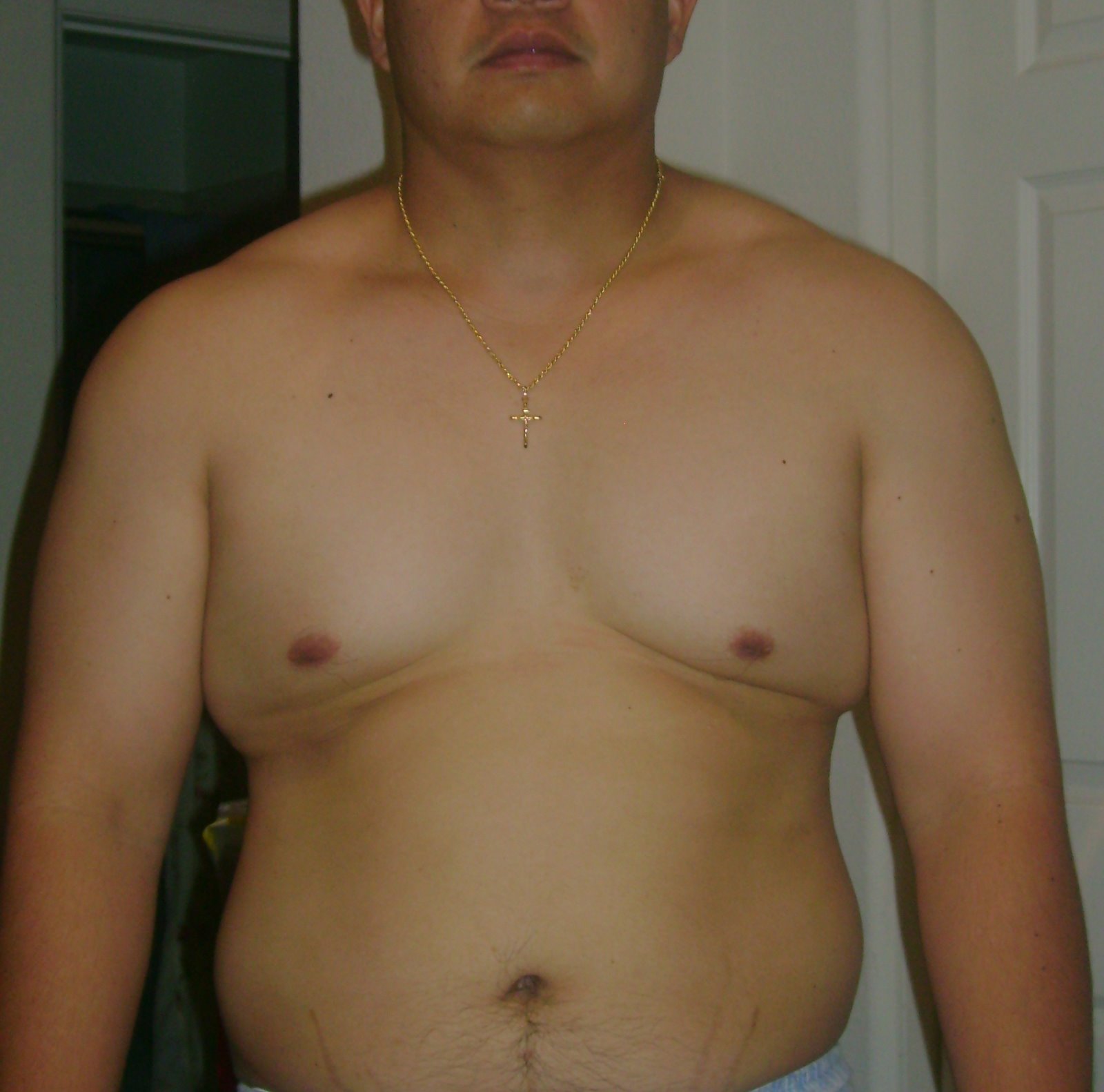
Got up early once again and banged out a kick ass off day routine consisting of BW circuits, core core circuits and some "cardio"...here it is:
Off Day Routine
Time: 530 am
2 minute rounds
7 rounds total
No rest between rounds but did rest a bit with the chin up sets.
I. Workout
- Chin Ups 10/10/8/7/7/7/7
- 2 hand DB Swings (25 lb DB's on each hand)x 10 reps
- Plyometric Explosive Push Ups x 10 reps
- Tuck Jumps (fast) x 12 reps
Notes: Easy? Think again....
II. Ab Circuits x2 rounds
- Kneeling Ab Wheel Roll Outs x 10 reps
- Plank push ups (elbows to hands/alternating) x 10 reps
- Turkish Get Ups with 10 lb KB x 5/side
- Side plank x 20 secs/side
- Renegade rows with 25 lb DB's 5 reps/side
Repeat One more time.
Notes: Phew.
III. "Cardio"
- 1/4 mile run under 2 minutes
Notes: drenching sweat.
IV. Stretching and Foam Rolls
Have a great weekend. Happy Mother's Day to all mothers!!!
Train Safe!
Andy
Friday, May 8, 2009


Thursday, May 7, 2009
Feeling Great
These past week's workouts have been a revelation. A nice change of pace for me and keeps things fresh. Change is already good.
Got my home gym done and hope to take some pics of it here soon and share on my blog.
Managed to get up early and do my workout at our work gym this morning. Another good one here...
By the way, there is another great Transformation Contest going on at Craig Ballantyne's Turbulence Training Website. You can get more information on rules and all that at his awesome forum HERE. I joined his 4th Contest and recently won 2nd Place in the male category...Hey, if I can do it - you can too. And if you do join - tell Craig I sent you!!!!
Today's workout
6 am
Shoulder swings, rotations.
BW circuit Warm up x 2
- Jumping jacks
- Push Ups
- Fwd Lunges
1) Power Hang Cleans 135x1x5; 145x1x5; 155x1x5; 165x1x5
2) DB step ups 30x2x10 (I can still feel a little soreness around my butt today so I cutback on the sets. 30 lb DB's on both hands isn't light at all I'm realizing!)
3) Seated Goodmorning 95x2x10; 105x2x10
Superset
4a) Decline Side to Side Push Ups BWx4x10
4b) Mixed Grip Pull Ups BWx4x10/8/6/6
5) Standing Cable Rows 30x4x10 (nothing too heavy)
Stretching....
Notes: Very good workout. Power cleans were awesome. All done in less than 35 minutes.
Train Safe!
Andy
Got my home gym done and hope to take some pics of it here soon and share on my blog.
Managed to get up early and do my workout at our work gym this morning. Another good one here...
By the way, there is another great Transformation Contest going on at Craig Ballantyne's Turbulence Training Website. You can get more information on rules and all that at his awesome forum HERE. I joined his 4th Contest and recently won 2nd Place in the male category...Hey, if I can do it - you can too. And if you do join - tell Craig I sent you!!!!
Today's workout
6 am
Shoulder swings, rotations.
BW circuit Warm up x 2
- Jumping jacks
- Push Ups
- Fwd Lunges
1) Power Hang Cleans 135x1x5; 145x1x5; 155x1x5; 165x1x5
2) DB step ups 30x2x10 (I can still feel a little soreness around my butt today so I cutback on the sets. 30 lb DB's on both hands isn't light at all I'm realizing!)
3) Seated Goodmorning 95x2x10; 105x2x10
Superset
4a) Decline Side to Side Push Ups BWx4x10
4b) Mixed Grip Pull Ups BWx4x10/8/6/6
5) Standing Cable Rows 30x4x10 (nothing too heavy)
Stretching....
Notes: Very good workout. Power cleans were awesome. All done in less than 35 minutes.
Train Safe!
Andy
Wednesday, May 6, 2009
Fried Abs and some Complexes for Breakfast..yummy!
Got to work early this morning for a pretty nice off day routine consisting of some core work and bb complexes, followed by some cardio on the treadmill in the end:
Time: 5:30 am
I. Core Circuits x 2:
Big Circles (35 lb Plate)
Corkscrews with a 15 lb DB
Stab Ball J Knives
Side planks
Hanging Leg raises
Planks with arms on Ball
BB Torque Twists (135 lb)
II. BB complex
3 rounds
- 45 lb Bar
10 reps/exercise
Deadlift
High Pull
Overhead press
Goodmornings
Rows
III. One mile run under 10 minutes (I suck.)
Stretching.
Time: 5:30 am
I. Core Circuits x 2:
Big Circles (35 lb Plate)
Corkscrews with a 15 lb DB
Stab Ball J Knives
Side planks
Hanging Leg raises
Planks with arms on Ball
BB Torque Twists (135 lb)
II. BB complex
3 rounds
- 45 lb Bar
10 reps/exercise
Deadlift
High Pull
Overhead press
Goodmornings
Rows
III. One mile run under 10 minutes (I suck.)
Stretching.
Tuesday, May 5, 2009
DB Snatches!
A follow up to my other blogpost (below) just now... =)
Week 3 of Dos' Power Training book and did a great routine this morning after taking the kids to shcool. Man, there's just literally tons of power moves you can do in his routines (almost like rosstraining but more geared towards more conventional training methods. Both are great athletic based routines). Instead of supersetting with this routine (I did however, superset blast strap semi-inverted rows with blast strap rear delt flies)..I went straight sets throughout with some interval training in the end. It went like this (with a good warm up of course).
Time: 9:30 am
Garage workout
a) DB snatches from floor
- warm up sets - 45x2x5/arm
- 60x5x5/arm (added one more set)
b) Barbell Front squat to Press (95x1x10, 115x2x10, 135x1x10) (modified to do 2 moves in one)
c) RDL's 135x2x10, 185x2x6
d) Incline BB Press 135x2x10, 135x1x6, 135x1x3 (right shoulder soreness from yesterday's volleyball. It always happens.)
--- modified superet ----
e1) Blast strap semi inverted rows 4x10
e2) Blast Strap rear delt flies 4x10
Intervals
Jump rope intervals 45 sec work/heavy bag 30 secs active rest
Finisher
Max Push ups - 52 reps (phew!)
a.
Week 3 of Dos' Power Training book and did a great routine this morning after taking the kids to shcool. Man, there's just literally tons of power moves you can do in his routines (almost like rosstraining but more geared towards more conventional training methods. Both are great athletic based routines). Instead of supersetting with this routine (I did however, superset blast strap semi-inverted rows with blast strap rear delt flies)..I went straight sets throughout with some interval training in the end. It went like this (with a good warm up of course).
Time: 9:30 am
Garage workout
a) DB snatches from floor
- warm up sets - 45x2x5/arm
- 60x5x5/arm (added one more set)
b) Barbell Front squat to Press (95x1x10, 115x2x10, 135x1x10) (modified to do 2 moves in one)
c) RDL's 135x2x10, 185x2x6
d) Incline BB Press 135x2x10, 135x1x6, 135x1x3 (right shoulder soreness from yesterday's volleyball. It always happens.)
--- modified superet ----
e1) Blast strap semi inverted rows 4x10
e2) Blast Strap rear delt flies 4x10
Intervals
Jump rope intervals 45 sec work/heavy bag 30 secs active rest
Finisher
Max Push ups - 52 reps (phew!)
a.
Shoulder Strength
Got back to playing recereational volleyball once or twice a week for about a good year now. Had a great game last night of 6 on 6...One thing I noticed is the day after a game - I do experience some right shoulder soreness which is directly related to overhead swinging. This is just the nature of the sport...just like baseball or tennis. I always do warm ups like shoulder swings, external rotations with db's, med balls or bands...I also have been using yoga as a form of exercise for flexibility as well. I had a friend who completely tore his pectoralis tendon from heavy lifting last year - and that's the least thing I would want to have happen to me.
Anwyay, read up this great article online from the Hughston Sports Medicine Foundation:
"Strengthen the Core to Help the Shoulder"
"Athletes who repetitively use their arms overhead during sport participation perform some of the most dynamic movements in athletics. Consider the baseball pitch, the tennis serve, or the volleyball spike. It is not unusual to see a baseball pitch thrown at more than 90 mph or a tennis ball served at more than 100 mph. Research has shown that, during the throwing motion, the shoulder rotates at speeds up to 7000° per second.1 The repetitive stresses placed on the shoulder during these movements make these overhead athletes vulnerable to shoulder injuries.2
The anatomy of the shoulder is unique because it provides extreme mobility, which enables athletes to perform at the high levels necessary for success. However, this mobility is available at the expense of shoulder stability, which is provided by a loose pouch of ligaments (tissues connecting two bones) and the rotator cuff muscles (group of muscles surrounding the shoulder that holds it in place). This delicate balance between mobility and stability can result in top performance; disruption of this balance can result in injury to the surrounding structures of the shoulder. Therefore, athletic trainers, therapists, and coaches have sought to develop exercise programs to combat the stresses that occur with repetitive shoulder movements.
During the throwing motion, the legs and hips create more than 54% of the force generated. Therefore, the athlete needs strong pelvic and trunk muscles to ensure the proper transmission of this force to the shoulder, arm, hand, and ultimately, the ball. If the core structures (that is, the trunk and pelvic muscles) are weak, the shoulder must create more force, which places greater stress on its anatomy."
Many shoulder problems can be prevented and treated with shoulder exercises.
Stretching exercises for the neck, shoulders, and upper back help relieve shoulder pain caused by poor posture.
Rotator cuff strengthening exercises help prevent shoulder impingement and rotator cuff injury.
Strengthening exercises for the muscles that control the shoulder blade is also important, as the shoulder blade (scapula) helps the rotator cuff to dynamically stabilize the shoulder.
The Importance of Strengthening the Rotator Cuff
Many muscles are involved in shoulder movement and all work together, but strengthening the rotator cuff is especially important. The rotator cuff is the main stabilizer of the shoulder joint during movement of the shoulder.
If the ball of the upper arm is not kept centered, abnormal stress is placed on surrounding tissue and may cause gradual injury. Strengthening the rotator cuff helps prevents common rotator cuff injuries including tendonitis, rotator cuff tears, and shoulder impingement syndrome.
Age-related changes in rotator cuff tendons leave them less elastic and more susceptible to injury. There is also a gradual loss of muscle mass that occurs with aging, which can be counteracted with strengthening exercises.
Rotator Cuff Muscles
The supraspinatus is located at the top of the shoulder and abducts the shoulder - it raises the upper arm and moves it away from the body.
The subscapularis is at the front of the shoulder - it internally rotates the shoulder.
The infraspinatus and teres minor are in the back of the shoulder - they externally rotate the shoulder.
Though each rotator cuff muscle moves the shoulder in a separate direction, though they all work together to stabilize the shoulder joint.
Strengthening all the muscles of the rotator cuff is important. The two small external rotator cuff muscles are often weaker than the larger internal rotator cuff muscle.
The rotator cuff muscle involved abduction (the supraspinatus) is the most commonly injured of the cuff muscles due to its position between two bones, which often squeeze this tendon during overhead movement.
Other Shoulder Stabilizers
The scapula (shoulder blade) helps the rotator cuff to stabilize the shoulder joint while in motion. The rotator cuff muscles arise from the scapula and attach to the head of the upper arm bone. If the shoulder blade is not stable, undue pressure may be placed on the rotator cuff. Strengthening the muscles that support the scapula are important.
The bicep tendon that runs over the top of the humerus and connects at the top of the shoulder joint also helps stabilize the shoulder joint. Overloading the biceps by lifting something heavy may cause biceps tendonitis (also called shoulder tendonitis). Strengthening the biceps helps prevent injury.
EXERCISE SAFELY
SAFE STRENGTHENING
Warm up. Warming up with five minutes of aerobic exercise prepares the body for exercise by increasing heart rate and breathing rate, and increasing blood flow to the muscles, and raising body temperature. Warming muscles and tendons improve range of motion and decrease the risk of injury.
Build up Strength Slowly.
Be Patient. Doing too much too soon can cause overuse injuries. Strengthening a group of muscles should only be done every second day to give the muscles a chance to heal, unless otherwise instructed by a physician or physical therapist. Strengthening exercises load the muscles slightly beyond their limits and cause microscopic tears. If given a proper chance to heal, muscles become stronger. If not given a chance to heal, chronic inflammation and problems may develop.
You should feel mildly fatigued by the end of ten to twelve repetitions (a set). If you feel fatigued after just a few repetitions, decrease the difficulty of the exercise by lowering resistance (e.g. use lighter weights or no weights). If you do not feel fatigued after a set, increase the difficulty of the exercise by increasing resistance.
In exercises where the arms are straight, do not "lock" the elbows. Your elbows should be slightly bent. This makes the muscles work harder to increase the effectiveness of the exercise. Locking a joint while exercising also increases the chances of injuring the joint.
Move slowly and smoothly. Do not jerk. Move slowly and steadily to use the muscles, not momentum, to complete the exercises. For exercises involving lifting or pulling, take three seconds to lift or pull, hold for one second, and take three seconds to lower or return.
Breathe: Remember to breathe normally while exercising. When lifting the arm, exhale; when lowering the arm inhale.
Proper Posture: As when standing or sitting, the shoulders should be kept back and down during exercise. (Slouching decreases the space the rotator cuff passes through and puts undue stress on the shoulder joint)
SAFE STRETCHING
Warm up.
Warms muscles are more flexible than cold muscles. Warming up with five minutes of aerobics, such as walking around the block or riding a stationary bike, increases blood flow to the muscles and tendons and decreases the chance of injury.
A warm shower or bath also warms up muscles and prepares them for stretching exercises. (which is why I like steam so much)
Stretch Gently. Avoid bouncing. Stretch until you feel a tug. Hold a stretch for about 30 seconds. Do not stretch to the point of pain. Over-stretching can tear muscles.
Breathe: Do not hold your breath during exercise. Breathe normally during stretching exercises.
Equipment
Dumbbells ( handheld weights) or resistance bands are often used to provide resistance in strengthening exercises. Handheld weights come in a series of weights, making it easy to gradually increase difficulty of exercises. Resistance bands provide resistance when stretched. Resistance bands come in a variety of thicknesses to provide different levels of resistance and are usually color-coded. Resistance bands are attached to a door knob or other immovable object. When using resistance bands, increasing the distance you stand from the wall increases the resistance.
SHOULDER EXERCISES
If you have shoulder pain or injury, consult your physician before doing shoulder exercises. Do not do exercises that cause pain while performing them.
(One thing I want to post here is rotator cuff exercises)
Rotator Cuff Exercises
*Three samples of internal rotation exercises and three external rotation exercises are shown. Choose one. Do not do all three. In the first sample, resistance is provided by using an immovable object (isometric exercises); in the second, resistance is provided by using dumbbells (handheld weights); in the third, resistance is provided by the use of resistance bands. See equipment. (Exercises that use dumbbells may also be performed without weights to decrease difficulty)
Isometric Internal Rotation
Stand near the end of outer corner of wall.
Bend elbow to 90-degree angle and keep elbow close to body, lower arm level with floor.
Press palm of hand into wall for 10 seconds. Repeat exercise on other side.
Internal Rotation using Dumbbells
Lie on side.
Hold dumbbell on same side, Bend elbow to 90-degree angle. Keep elbow against body.
Slowly lift dumbbell upward and toward body.
Pause, and return to start.
Repeat 10 times. Repeat exercise on other side.
Internal Rotation using Resistance Band
Attach resistance band to doorknob / wall.
Stand with right side to wall.
Hold resistance band with right hand.
Bend elbow to 90-degree angle, hand facing frontward and elbow close to body.
Slowly rotate hand toward the middle of the body.
Return to starting position.
Repeat 10 times. Repeat exercise on other side
Isometric External Rotation
Stand with side to wall.
Bend elbow to 90-degree angle. Keep elbow close to body.
Press back of hand into wall for 10 seconds. Repeat exercise on other side
External Rotation using Dumbbells
Lie on left side.
With right arm, hold dumbbell next to body, elbow bent 90-degrees.
Slowly lift upward until back of hand faces backward.
Return to starting position.
Repeat 10 times. Repeat exercise on other side
External Rotation using Resistance Band
Attach resistance band to doorknob / wall.
Stand with left side to wall.
Hold resistance band with right hand.
Start with right hand in middle of body, elbow bent 90-degrees.
Slowly stretch band by moving arm outward until back of hand facing backward.
Do one set (10 repetitions) Repeat exercise on other side.
Lateral Raise using Dumbbell
Stand or sit in chair.
With arms at side and thumbs pointed upward, slowly raise arm to the sides but slightly toward the front (at about a 30 degree angle to the front of the body) until almost shoulder level.
Repeat 10 times.
Lying Lateral Raise using Dumbbell
Lie on left side. Hold dumbbell in right hand in, placed in front of thigh, palm facing leg. Keep elbow slightly bent. Raise dumbbell slowly until arm is at 45-degree angle.
Return to starting position.
Repeat 10 times. Repeat exercise on other side.
Lateral Raise with Internal Rotation using Dumbbell
Stand or sit.
With arms at side and thumbs pointed toward ground (shoulders internally rotated), slowly raise arm to the sides but slightly toward the front (at about a 30 degree angle to the front of the body) until almost shoulder level.
Repeat 10 times.
Resources: Shoulder Pain Management
Anwyay, read up this great article online from the Hughston Sports Medicine Foundation:
"Strengthen the Core to Help the Shoulder"
"Athletes who repetitively use their arms overhead during sport participation perform some of the most dynamic movements in athletics. Consider the baseball pitch, the tennis serve, or the volleyball spike. It is not unusual to see a baseball pitch thrown at more than 90 mph or a tennis ball served at more than 100 mph. Research has shown that, during the throwing motion, the shoulder rotates at speeds up to 7000° per second.1 The repetitive stresses placed on the shoulder during these movements make these overhead athletes vulnerable to shoulder injuries.2
The anatomy of the shoulder is unique because it provides extreme mobility, which enables athletes to perform at the high levels necessary for success. However, this mobility is available at the expense of shoulder stability, which is provided by a loose pouch of ligaments (tissues connecting two bones) and the rotator cuff muscles (group of muscles surrounding the shoulder that holds it in place). This delicate balance between mobility and stability can result in top performance; disruption of this balance can result in injury to the surrounding structures of the shoulder. Therefore, athletic trainers, therapists, and coaches have sought to develop exercise programs to combat the stresses that occur with repetitive shoulder movements.
During the throwing motion, the legs and hips create more than 54% of the force generated. Therefore, the athlete needs strong pelvic and trunk muscles to ensure the proper transmission of this force to the shoulder, arm, hand, and ultimately, the ball. If the core structures (that is, the trunk and pelvic muscles) are weak, the shoulder must create more force, which places greater stress on its anatomy."
Many shoulder problems can be prevented and treated with shoulder exercises.
Stretching exercises for the neck, shoulders, and upper back help relieve shoulder pain caused by poor posture.
Rotator cuff strengthening exercises help prevent shoulder impingement and rotator cuff injury.
Strengthening exercises for the muscles that control the shoulder blade is also important, as the shoulder blade (scapula) helps the rotator cuff to dynamically stabilize the shoulder.
The Importance of Strengthening the Rotator Cuff
Many muscles are involved in shoulder movement and all work together, but strengthening the rotator cuff is especially important. The rotator cuff is the main stabilizer of the shoulder joint during movement of the shoulder.
If the ball of the upper arm is not kept centered, abnormal stress is placed on surrounding tissue and may cause gradual injury. Strengthening the rotator cuff helps prevents common rotator cuff injuries including tendonitis, rotator cuff tears, and shoulder impingement syndrome.
Age-related changes in rotator cuff tendons leave them less elastic and more susceptible to injury. There is also a gradual loss of muscle mass that occurs with aging, which can be counteracted with strengthening exercises.
Rotator Cuff Muscles
The supraspinatus is located at the top of the shoulder and abducts the shoulder - it raises the upper arm and moves it away from the body.
The subscapularis is at the front of the shoulder - it internally rotates the shoulder.
The infraspinatus and teres minor are in the back of the shoulder - they externally rotate the shoulder.
Though each rotator cuff muscle moves the shoulder in a separate direction, though they all work together to stabilize the shoulder joint.
Strengthening all the muscles of the rotator cuff is important. The two small external rotator cuff muscles are often weaker than the larger internal rotator cuff muscle.
The rotator cuff muscle involved abduction (the supraspinatus) is the most commonly injured of the cuff muscles due to its position between two bones, which often squeeze this tendon during overhead movement.
Other Shoulder Stabilizers
The scapula (shoulder blade) helps the rotator cuff to stabilize the shoulder joint while in motion. The rotator cuff muscles arise from the scapula and attach to the head of the upper arm bone. If the shoulder blade is not stable, undue pressure may be placed on the rotator cuff. Strengthening the muscles that support the scapula are important.
The bicep tendon that runs over the top of the humerus and connects at the top of the shoulder joint also helps stabilize the shoulder joint. Overloading the biceps by lifting something heavy may cause biceps tendonitis (also called shoulder tendonitis). Strengthening the biceps helps prevent injury.
EXERCISE SAFELY
SAFE STRENGTHENING
Warm up. Warming up with five minutes of aerobic exercise prepares the body for exercise by increasing heart rate and breathing rate, and increasing blood flow to the muscles, and raising body temperature. Warming muscles and tendons improve range of motion and decrease the risk of injury.
Build up Strength Slowly.
Be Patient. Doing too much too soon can cause overuse injuries. Strengthening a group of muscles should only be done every second day to give the muscles a chance to heal, unless otherwise instructed by a physician or physical therapist. Strengthening exercises load the muscles slightly beyond their limits and cause microscopic tears. If given a proper chance to heal, muscles become stronger. If not given a chance to heal, chronic inflammation and problems may develop.
You should feel mildly fatigued by the end of ten to twelve repetitions (a set). If you feel fatigued after just a few repetitions, decrease the difficulty of the exercise by lowering resistance (e.g. use lighter weights or no weights). If you do not feel fatigued after a set, increase the difficulty of the exercise by increasing resistance.
In exercises where the arms are straight, do not "lock" the elbows. Your elbows should be slightly bent. This makes the muscles work harder to increase the effectiveness of the exercise. Locking a joint while exercising also increases the chances of injuring the joint.
Move slowly and smoothly. Do not jerk. Move slowly and steadily to use the muscles, not momentum, to complete the exercises. For exercises involving lifting or pulling, take three seconds to lift or pull, hold for one second, and take three seconds to lower or return.
Breathe: Remember to breathe normally while exercising. When lifting the arm, exhale; when lowering the arm inhale.
Proper Posture: As when standing or sitting, the shoulders should be kept back and down during exercise. (Slouching decreases the space the rotator cuff passes through and puts undue stress on the shoulder joint)
SAFE STRETCHING
Warm up.
Warms muscles are more flexible than cold muscles. Warming up with five minutes of aerobics, such as walking around the block or riding a stationary bike, increases blood flow to the muscles and tendons and decreases the chance of injury.
A warm shower or bath also warms up muscles and prepares them for stretching exercises. (which is why I like steam so much)
Stretch Gently. Avoid bouncing. Stretch until you feel a tug. Hold a stretch for about 30 seconds. Do not stretch to the point of pain. Over-stretching can tear muscles.
Breathe: Do not hold your breath during exercise. Breathe normally during stretching exercises.
Equipment
Dumbbells ( handheld weights) or resistance bands are often used to provide resistance in strengthening exercises. Handheld weights come in a series of weights, making it easy to gradually increase difficulty of exercises. Resistance bands provide resistance when stretched. Resistance bands come in a variety of thicknesses to provide different levels of resistance and are usually color-coded. Resistance bands are attached to a door knob or other immovable object. When using resistance bands, increasing the distance you stand from the wall increases the resistance.
SHOULDER EXERCISES
If you have shoulder pain or injury, consult your physician before doing shoulder exercises. Do not do exercises that cause pain while performing them.
(One thing I want to post here is rotator cuff exercises)
Rotator Cuff Exercises
*Three samples of internal rotation exercises and three external rotation exercises are shown. Choose one. Do not do all three. In the first sample, resistance is provided by using an immovable object (isometric exercises); in the second, resistance is provided by using dumbbells (handheld weights); in the third, resistance is provided by the use of resistance bands. See equipment. (Exercises that use dumbbells may also be performed without weights to decrease difficulty)
Isometric Internal Rotation
Stand near the end of outer corner of wall.
Bend elbow to 90-degree angle and keep elbow close to body, lower arm level with floor.
Press palm of hand into wall for 10 seconds. Repeat exercise on other side.
Internal Rotation using Dumbbells
Lie on side.
Hold dumbbell on same side, Bend elbow to 90-degree angle. Keep elbow against body.
Slowly lift dumbbell upward and toward body.
Pause, and return to start.
Repeat 10 times. Repeat exercise on other side.
Internal Rotation using Resistance Band
Attach resistance band to doorknob / wall.
Stand with right side to wall.
Hold resistance band with right hand.
Bend elbow to 90-degree angle, hand facing frontward and elbow close to body.
Slowly rotate hand toward the middle of the body.
Return to starting position.
Repeat 10 times. Repeat exercise on other side
Isometric External Rotation
Stand with side to wall.
Bend elbow to 90-degree angle. Keep elbow close to body.
Press back of hand into wall for 10 seconds. Repeat exercise on other side
External Rotation using Dumbbells
Lie on left side.
With right arm, hold dumbbell next to body, elbow bent 90-degrees.
Slowly lift upward until back of hand faces backward.
Return to starting position.
Repeat 10 times. Repeat exercise on other side
External Rotation using Resistance Band
Attach resistance band to doorknob / wall.
Stand with left side to wall.
Hold resistance band with right hand.
Start with right hand in middle of body, elbow bent 90-degrees.
Slowly stretch band by moving arm outward until back of hand facing backward.
Do one set (10 repetitions) Repeat exercise on other side.
Lateral Raise using Dumbbell
Stand or sit in chair.
With arms at side and thumbs pointed upward, slowly raise arm to the sides but slightly toward the front (at about a 30 degree angle to the front of the body) until almost shoulder level.
Repeat 10 times.
Lying Lateral Raise using Dumbbell
Lie on left side. Hold dumbbell in right hand in, placed in front of thigh, palm facing leg. Keep elbow slightly bent. Raise dumbbell slowly until arm is at 45-degree angle.
Return to starting position.
Repeat 10 times. Repeat exercise on other side.
Lateral Raise with Internal Rotation using Dumbbell
Stand or sit.
With arms at side and thumbs pointed toward ground (shoulders internally rotated), slowly raise arm to the sides but slightly toward the front (at about a 30 degree angle to the front of the body) until almost shoulder level.
Repeat 10 times.
Resources: Shoulder Pain Management
Sunday, May 3, 2009
The Pac Man!!!!

To Manny Pacquiao...what a fight. What a fight! By far the best POUND FOR POUND FIGHTER in the boxing world today. Filipinos were truly represented last night. Great fight.
Cmon Floyd Merriweather...bring it on man. Phew!
Garage workout
Time: 5:30
Hurricane Workout Off Day Routine
- 60 sec per exercise
- circuit style
- 2 minute rest periods
Circuit:
Heavy Bag Punching
Running High Knees
Burpees
Jump with arm swing and landing on balls of feet
Inverted Rows
2 handed DB Swings
Treadmill Run
Ab circuit x2
Leg raises
Standing Oblique Side crunches
Plank on Stab Ball
Side Planks
Stretching....
Saturday, May 2, 2009
Hugh Hackman Is Fit
These workouts are pretty darn cool. One it's total fitness based, it trains alot of multi-movements on different planes per exercise. High volume in nature but definitely feel the effects of these workouts 2 weeks in. One thing I've been noticing is some of my weight preferences have been more on the moderate side than trying to go for world records in a routine. I think this is a great change up where I would always want to go heavy. So I think changing up weight loads is very important especially when trying to complete 10 reps of a set for 4 sets. Not easy....
Today's workout....
Time: 5:45
Garage workout
a) KB Cleans 4x5
b) RDL's 4x10
c1)Incline BB Press 4x10
c2)DB Bulgarian Split Squats
d1)KB High Pulls 4x10 (loved this one)
d2)Standing plate torso twists 4x10
e1)KB Jerks
e2)Chin Ups to failure 9/6/6
NO intervals.

Notes: Watched Wolverine last night with the family and it was a very good movie. Being a comic buff myself - I was really able to appreciate the movie even more. Great movie and if you get a chance to see the movie you just have to appreciate some of the physiques on these guys - damn! Hugh Hackman is fit! There was another guy who was playing Deadpool who was pretty damn fit too. Awesome movie...
Read up on Hugh Hackman's guest appearance on the Oprah Winfrey show here:
http://www.oprah.com/article/oprahshow/20090501-tows-hugh-jackman
Oh and Oprah and Hugh Twitter, too!!!
Great stuff.
Train safe!
Andy
Today's workout....
Time: 5:45
Garage workout
a) KB Cleans 4x5
b) RDL's 4x10
c1)Incline BB Press 4x10
c2)DB Bulgarian Split Squats
d1)KB High Pulls 4x10 (loved this one)
d2)Standing plate torso twists 4x10
e1)KB Jerks
e2)Chin Ups to failure 9/6/6
NO intervals.

Notes: Watched Wolverine last night with the family and it was a very good movie. Being a comic buff myself - I was really able to appreciate the movie even more. Great movie and if you get a chance to see the movie you just have to appreciate some of the physiques on these guys - damn! Hugh Hackman is fit! There was another guy who was playing Deadpool who was pretty damn fit too. Awesome movie...
Read up on Hugh Hackman's guest appearance on the Oprah Winfrey show here:
http://www.oprah.com/article/oprahshow/20090501-tows-hugh-jackman
Oh and Oprah and Hugh Twitter, too!!!
Great stuff.
Train safe!
Andy
Subscribe to:
Posts (Atom)


.jpg)
.jpg)